
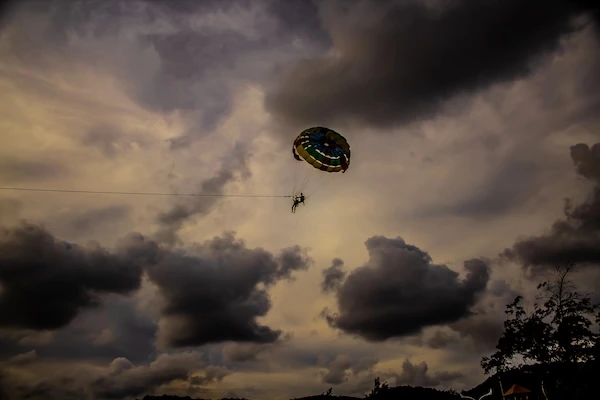
Understanding weather conditions is an important part of planning a Destin parasailing trip. Wind, visibility, waves, currents and thunderstorms can affect the boat ride, launch, flight and return. The Captain makes the final operating decision based on conditions at the time of the trip; a forecast that looks favorable earlier in the day does not guarantee that a flight will run.
For marine planning, NOAA describes forecasts in terms of conditions such as wind, waves, visibility and significant weather, including showers and thunderstorms. Conditions can change along the coast, so the operator’s on-site assessment matters as much as the forecast. For more on how the crew evaluates an outing, see how the Destin parasailing crew helps manage safety.
Wind conditions
Wind speed, direction and gusts influence how the parasail loads, how smoothly the boat can operate and how comfortably the crew can manage launch and retrieval. A steady, manageable breeze may be suitable, while stronger, gusty or rapidly changing wind can lead to a delay, a change in plans or a cancellation.
There is no single wind number that can be applied to every trip in every condition. The Captain considers the full combination of wind, boat handling, rider weights and other factors. Guests should follow the crew’s decision rather than assume that a trip is safe because the sky looks clear at the dock.
Visibility, rain and thunderstorms
Good visibility helps the crew monitor the boat’s surroundings and changing conditions during launch, flight and retrieval. Rain, haze, low visibility or nearby storm activity can make an outing unsuitable even when the rain is not directly overhead.
The National Weather Service says no place outdoors is safe when thunderstorms are in the area. If you hear thunder, move to substantial shelter or an enclosed, metal-topped vehicle and remain there for at least 30 minutes after the last sound of thunder. For a parasailing trip, that means the Captain may delay or cancel rather than operate near a thunderstorm.
The assigned photo shows a parasail beneath dark storm clouds. It illustrates why dramatic-looking weather is not a signal that conditions are appropriate for a flight; the crew must assess the actual weather and marine conditions.
Waves, currents and the boat ride
Wave height, wave period, currents and wind-driven chop affect the boat ride and the crew’s ability to conduct a controlled launch and retrieval. NOAA’s marine guidance combines observations and forecast models for wind, waves, visibility and ocean conditions, but a general forecast does not replace the Captain’s local assessment.
Parasailers take off and land directly on the boat rather than in the water. Even so, rough water can affect the vessel and the timing of flight operations. If Gulf conditions are too rough, the operator information says the Captain may head into the calmer waters of Choctawhatchee Bay instead; that is a weather-dependent operating decision, not a guaranteed route.
When is the best time of day to parasail?
Just Chute Me! recommends early morning because Gulf conditions are often calmer, winds are lighter and there is less boat traffic. Early departures may also help avoid the afternoon showers that are common in summer. Weather still changes, so an early booking is not a promise that a flight will operate. For broader seasonal planning, compare this advice with the Destin parasailing seasonal guide.
What happens if weather changes your trip?
If the Captain cancels because of weather, the operator policy provides a full refund. If you need to cancel yourself, call at least 24 hours before the scheduled trip for a full refund. Contact the operator directly for the current status of a departure rather than relying on a general forecast.
When conditions are suitable and you are ready to plan, you can learn about a Destin parasailing adventure and review the operator’s Destin parasailing experiences before using the booking page. Confirm the departure details and weather policy when you reserve.