Planning a parasailing trip in Destin and wondering whether it is safe? Parasailing involves a boat, towline, canopy, winch and passenger harness working together. Documented accidents have involved equipment failures, worsening weather, operational mistakes and people not following instructions. The risks are serious, but clear operating limits and careful procedures can reduce them.
This article uses the National Transportation Safety Board’s 2014 parasailing safety study for historical accident and equipment findings. It is not a current accident-rate report, and an old incident should not be read as evidence that every operator or trip has the same risk.
What causes parasailing accidents?
The main documented risk areas are towline condition and attachment, weather, harness or flight-bar equipment, crew decisions and passenger compliance. A safe decision depends on the conditions and equipment on the day of the trip—not on a promise that parasailing is risk-free.
Weak or damaged towlines
The NTSB’s 2014 study identified towline failure as a leading cause of injury and death in the parasailing accidents it examined. Its laboratory testing found that a bowline knot reduced the strength of a new rope by more than half, and the agency’s safety material says knots can reduce strength by as much as 70 percent. Sun, saltwater, shock loading, abrasion and general wear can weaken a line further.
The NTSB recommended frequent, careful line inspections; wind measurement with an anemometer or similar device; steady winch operation; usage and examination logs; and storage in a clean, dry place out of direct sunlight. Those are operator practices to verify—not guarantees that a particular line is in perfect condition.

Wind, lightning and reduced visibility
Florida’s current commercial-parasailing statute prohibits operations when sustained wind exceeds 20 mph, gusts are 15 mph higher than the sustained wind, gusts exceed 25 mph, rain or heavy fog reduces visibility below one-half mile, or a known lightning storm is within 7 miles of the parasailing area. Operators must use available means to determine prevailing and forecast weather and record it in a weather log.
The law sets a limit; it does not mean every trip is appropriate at the limit. Conditions can change, and the captain may cancel or delay a flight when the weather is not suitable. For more context on how wind, visibility, waves and thunderstorms can affect a Destin trip, see this guide to how weather affects parasailing safety in Destin. Ask how the crew is monitoring conditions before boarding, and do not treat a scheduled departure as a promise that the flight will operate.
Worn harnesses and other equipment
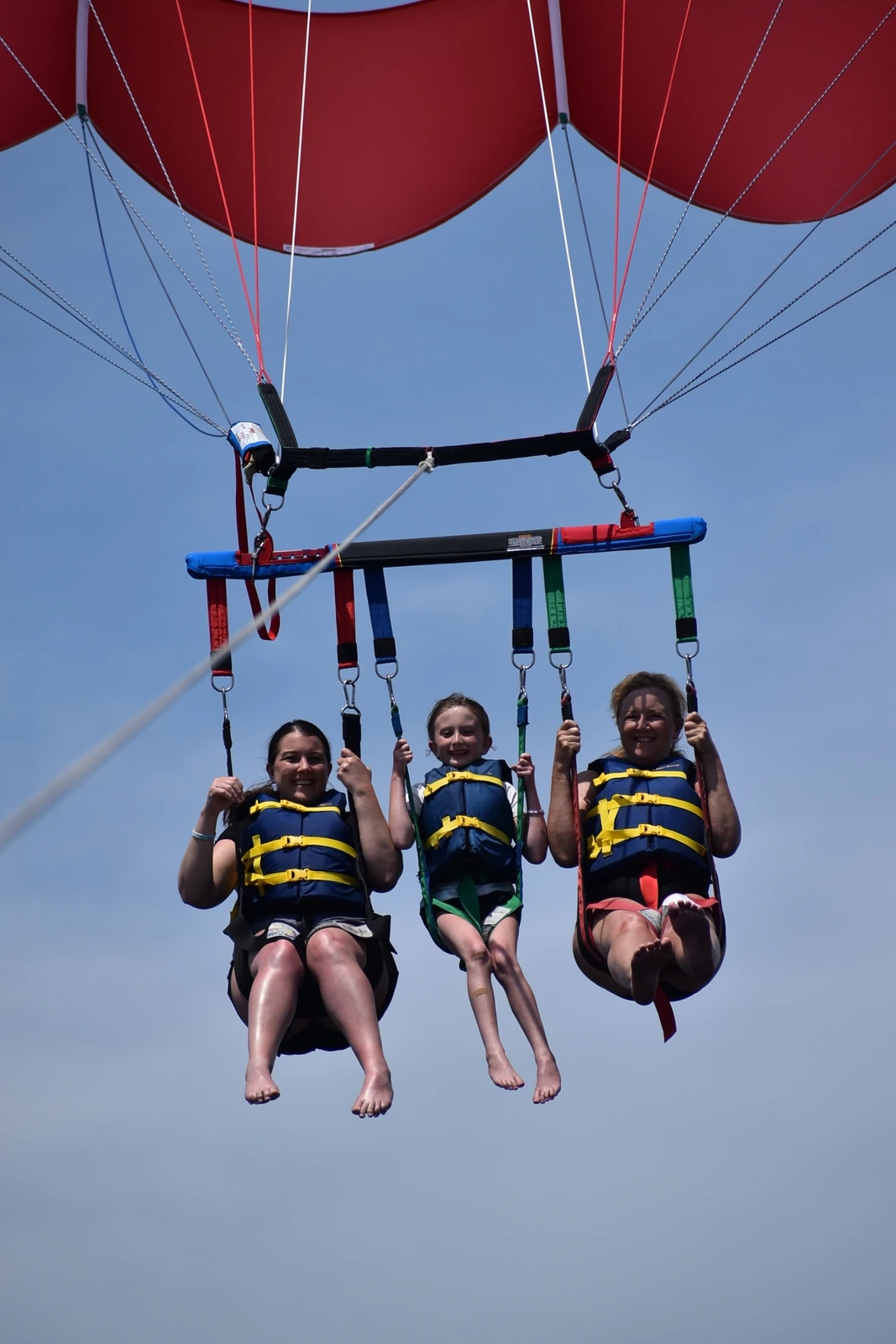
In a Pompano Beach accident examined in its 2014 report, the NTSB found that a passenger’s worn harness failed under load. The report is a historical case study, not evidence that a particular operator’s equipment is worn today. A passenger can reasonably ask the crew to explain the harness fit, attachment points and takeoff and landing procedure before launch.
Florida also requires parasailing participants to wear a noninflatable, U.S. Coast Guard-approved personal flotation device used according to its approval label. Parasailing is prohibited from one-half hour after sunset until one-half hour before sunrise, and the vessel must have a person other than the operator observing the person being towed.
Inexperienced or inattentive operations
Accidents can become more likely when a crew overlooks weather, equipment condition, passenger fit or the sequence for launching and recovering the canopy. Florida requires the operator of a commercial parasailing vessel to hold a current U.S. Coast Guard license authorizing carriage of passengers for hire. That legal requirement does not by itself prove the quality of a specific crew, so guests should listen to the briefing and ask about anything they do not understand. For a Destin-specific planning perspective, read how a parasailing crew keeps riders safe in Destin.
Not following safety instructions
Passengers should follow the crew’s directions about harness placement, body position, hand placement, takeoff, landing and whether they want to get their feet wet. Tell the crew about anything that could affect participation before launch, and speak up if equipment feels loose or uncomfortable. Do not stand, change positions or attempt to detach equipment unless directed.
How to make a safer decision
- Check that the operator explains the launch, flight and recovery process before you go up.
- Ask how weather and wind are being monitored, and accept a delay or cancellation when conditions are unsuitable.
- Confirm that the harness and approved flotation device fit correctly and that you understand the crew’s instructions.
- Follow Florida’s daylight and observer requirements and every instruction given by the crew.
Parasailing can be a calm experience, but no operator can eliminate every risk. For Parasail Destin’s current trip questions, including age, weight, observer and weather-cancellation policies, see the FAQ. To review the current Destin parasailing trip information before booking, visit Parasail Destin’s trip options. Equipment photos are available in the photo gallery, and current booking information is on the rates and information page.